
By A1 Cash for Cars Team · Last updated: 13 November 2026
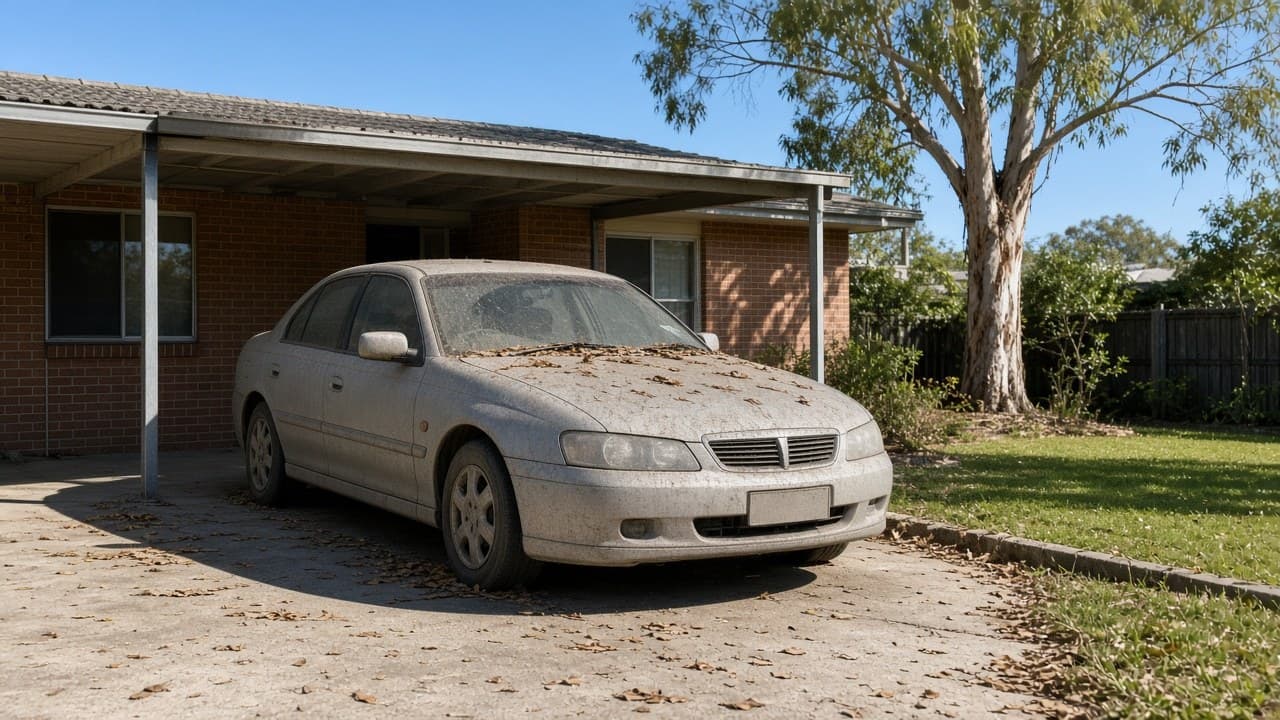
A1 Cash for Cars is a licensed motor dealer with a yard at 60 Bowhill Rd, Willawong. We assess and buy unwanted, damaged, unregistered, scrap and non-running cars, utes, vans and 4WDs across Greater Brisbane, including cars that have been parked in garages, carports and backyards for years.
Yes, you can sell a car that has been sitting for years in QLD. Long storage doesn’t stop a sale, but it usually means a flat battery, tired tyres, old fuel, lapsed rego and no safety certificate. This guide covers what storage does to a car, the registration rules, moving it legally and your selling options.
Key takeaways
- A long-parked car can still be sold. Queensland lets you sell an unregistered vehicle without a safety certificate, as long as you create a written record of the sale. (Queensland Government)
- Rego that expired more than 3 months ago can’t be renewed. You’d need a new registration, which needs a current safety certificate. (Queensland Government)
- Storage damage shows up at inspection. Perished tyres, seized brakes, fuel leaks and damaged wiring are all reasons for rejection in Queensland’s Light Vehicle Inspection Manual. (Department of Transport and Main Roads)
- You can’t just drive it to a buyer. An unregistered car generally needs an unregistered vehicle permit and CTP cover, and a car that isn’t safe to drive must be towed or transported. (Queensland Government)
- No safety certificate when you sell to a licensed dealer. Vehicles that are unregistered, or traded to licensed motor dealers, don’t need one. (Queensland Government)
Can you sell a car that has been sitting for years in QLD?
Yes. No Queensland rule stops you selling a car just because it hasn’t been driven for years. The real questions are its registration status, its condition and how it will be moved. You can revive and re-register it, sell it unregistered as is, or sell it to a licensed motor dealer or wrecker without a safety certificate.
Cars end up sitting for all sorts of reasons: a second car nobody drives, a project that stalled, an owner who moved overseas or into care, or a car left behind in a deceased estate. Whatever the story, buyers will want to know four things:
- Is it registered? Current, expired or cancelled rego changes what you have to do.
- Does it start, roll and steer? This affects how it’s moved and who will buy it.
- What has storage done to it? Tyres, brakes, battery, fuel and wiring are the usual suspects.
- Can you prove you own it? Long-parked cars often come with missing paperwork or an estate to sort out.
If the car simply won’t start, our guide to selling a car that won’t start covers non-running cars in general. This guide focuses on what years of sitting do to a car and its paperwork.
What happens to a car that sits for years?
Rubber, fluids and batteries break down even when a car isn’t used. After years parked, expect a flat or dead battery, flat or perished tyres, stale fuel, brakes that stick or seize, and possible rodent, rust or moisture damage. None of this stops a sale, but it affects what the car needs before it can be driven.
Motoring clubs explain why. RAC WA says the battery is probably the component that suffers most from lack of use, petrol has a shelf life, tyres resting in the same spot for a long time can be damaged, and brake friction material can fuse to the rotor or drum when the handbrake stays on (RAC WA). RACQ’s battery expert says batteries benefit from being used and an average battery is likely to last between 38 and 48 months (RACQ).
| Problem | What years of sitting can do | Why it matters when selling |
|---|---|---|
| Battery | Drains flat and may not hold a charge again | The car may need a jump start, a charger or a new battery before anyone can test it |
| Tyres | Lose pressure, develop flat spots, or crack and perish with age and sun | Perished tyres are a reason for rejection at a safety inspection and may not hold air for moving |
| Fuel | Petrol goes stale; old fuel can leave residue in the system | A long-parked car may run poorly or not start on old fuel |
| Brakes | Pads or shoes can stick to rotors or drums, and parts can corrode | Seized brakes can stop the car rolling, which affects how it’s loaded and moved |
| Rubber parts and fluids | Hoses, seals, wiper rubbers and CV boots harden or perish; fluids age | Perished rubber and leaks are common reasons a stored car fails inspection |
| Rodents and pests | Nests in the engine bay or air box; chewed wiring or insulation | Electrical faults can be hard to trace and expensive to fix |
| Rust and moisture | Surface rust, corrosion underneath, mould or damp smells inside | Structural rust and corroded fuel or brake lines can fail inspection |
Before anyone tries to start a car that has sat for years, it’s worth having a mechanic look at it first. Cranking an engine on old fuel, with dry seals or chewed wiring, can make things worse. If you’re not planning to fix it, leave it as it is and describe it honestly. Our guide to selling a rusty car covers rust in more detail.
What happens to the registration of a car that has been sitting?
It depends on whether you kept paying for it. If the rego is current, the car is still registered to you. If it expired less than 3 months ago, you can renew it. If it expired more than 3 months ago, or was cancelled, it needs a new registration with a safety certificate.
The Queensland Government’s renew your registration and register your vehicle pages set out the rules:
| Registration status | What the official pages say | What it means for a long-parked car |
|---|---|---|
| Current, but the car isn’t used | You’re still the registered operator and remain liable for tolls and fines while it’s registered in your name | You may be paying rego for a car you don’t drive; cancelling a current registration may give a partial refund less a cancellation fee |
| Expired less than 3 months (90 days) | Can be renewed, with a late fee to reinstate it | Renewal is possible, but the car still needs to be safe to drive |
| Expired more than 3 months ago | A new registration is needed | You’ll need a current safety certificate, CTP insurance, ID and garage address evidence, and the fees and duty |
| Cancelled | Can’t be renewed; apply for a new registration instead | Same as above. Standard plates are surrendered when you cancel |
Two points catch people out. First, if a vehicle has been unregistered for more than 30 days, you can be fined for driving uninsured and won’t be covered by CTP insurance (Queensland Government). Second, you can’t register a vehicle if the State Penalties Enforcement Registry (SPER) has registered an interest against it, which a PPSR search will show (Queensland Government).
Where the car has been sitting matters too. Brisbane City Council’s local law says a person must not park or leave standing an unregistered vehicle on a road, and Council can seize and remove it (Brisbane City Council). Queensland Police advise moving a car onto private property once its rego expires (Queensland Police Service). Our guides to cancelling car registration, selling an unregistered car and abandoned car removal go into more detail.
Do you need a safety certificate to sell a car that has been sitting for years?
Not always. You need one to transfer a registered car to a private buyer or to re-register an unregistered car. You don’t need one to sell an unregistered car, or to sell to a licensed motor dealer. For a car that has sat for years, getting a certificate often means fixing storage damage first.
The Queensland Government’s safety certificates page says a certificate is needed when transferring registration to a new owner, when transferring from interstate registration, or when re-registering an unregistered vehicle. You must have one before disposing of a registered vehicle, other than to a dealer, and you can be fined over $700 for not having one. The inspection fee for a motor vehicle up to 4,500kg GVM is $102.70 (as at 1 July 2026).
The Queensland Light Vehicle Inspection Manual (effective 7 July 2026) is what approved inspection stations use. These reasons for rejection are especially relevant to a car that has been sitting:
| Area | Reason for rejection (summarised from the manual) |
|---|---|
| Tyres | Cuts, bulges, tread separation, exposed or damaged cords, perished tyres or other evidence of potential case failure; tread less than 1.5mm deep; cracked, damaged, perished or loose valve stems |
| Brakes | Any brake component that is seized, severely corroded or inoperative, or leaking; hydraulic lines or hoses that are damaged, corroded or leaking |
| Fuel system | Leaking fuel system components, or a fuel tank or fuel lines affected by rust or corrosion |
| Battery and wiring | A battery that is cracked, leaking or has missing caps; electrical wiring that isn’t correctly insulated or is exposed to chafing |
| Wipers | Wiper rubbers that are split, frayed, hardened or perished |
| Rubber components | Perished or deteriorated suspension, steering and drive line rubber, such as steering rack seals and CV joint boots |
| Body and frame | Frame components cracked, distorted or corroded to the point of being weakened (minor rust in body panels isn’t considered dangerous to structural integrity) |
Only the approved inspection station can decide whether a car passes. Our guide to safety certificates when selling a car in QLD covers validity periods and exemptions.
How do you move a car that has been sitting for years?
To drive or tow an unregistered car on the road, you’ll generally need an unregistered vehicle permit and Class 22 CTP insurance, with the number plates removed. A permit is only issued for a car that’s safe to drive. If it isn’t safe, or won’t roll, it needs to be transported on a tow truck or trailer.
The Queensland Government’s unregistered vehicle permit page sets out the rules:
| Situation | What the official page says |
|---|---|
| Moving for repairs, to a buyer or to another property | A permit is needed, the vehicle must be in a safe condition to drive and the driver must carry the permit. Permits run from 1 to 7 days for the most direct route |
| Driving to get a safety certificate or to register | No permit is needed, but you must carry a valid CTP insurance certificate, remove the number plates and not stop anywhere else on the way |
| Car fails its safety inspection | It can’t be driven or towed and must be transported |
| Car isn’t safe to drive | No permit can be issued; Queensland says to get a tow truck to move it |
| Serious unresolved recall | No permit can be issued if the vehicle is subject to a serious unresolved manufacturer defect recall, such as the Takata airbag recall |
| Plates still attached | No permit can be issued while number plates, including personalised plates, are attached |
The recall point is worth checking on a car that has been parked for a long time, because owners can miss recall letters. Contact the manufacturer or a franchised dealer with the VIN if you’re unsure.
For most cars that have sat for years, with flat tyres, a dead battery and brakes that may not release, the practical answer is transport rather than driving. If you’re selling to a licensed dealer or wrecker, ask how they move cars in that condition and whether access is suitable for their truck.
Should you revive the car or sell it as is?
Get an honest assessment first. Reviving a car that has sat for years can mean a battery, tyres, fluids, brake work, fuel system cleaning and a safety certificate before you can sell it privately as a registered car. That can make sense for a desirable or low-kilometre car. For an older, everyday car, selling as is is often simpler.
| Option | When it can make sense | Things to weigh up |
|---|---|---|
| Revive, re-register and sell privately | Desirable, low-kilometre or classic car, and you have time and a mechanic you trust | Repairs, safety certificate, CTP, registration fees and duty all come before the sale, and costs can grow once work starts |
| Sell privately as is, unregistered | A buyer who wants a project and can arrange their own transport | No safety certificate needed; create a signed written record of the sale; expect buyers to discount for unknowns |
| Sell to a licensed motor dealer or wrecker | Older car, storage damage, no time, or you just want it gone | No safety certificate needed; the offer reflects the car’s condition and how it has to be moved |
| Keep it parked | You genuinely plan to restore or use it soon | Ongoing deterioration, possible rego costs if still registered, and the space it takes up |
Questions to ask before you spend money:
- What does a mechanic say it needs? Get a written list and quote before replacing anything.
- Is the car worth more than the repairs? Compare the likely sale price of a registered, working car with the total cost to get there.
- What’s the registration status? If it needs a new registration, add the safety certificate, CTP and registration costs.
- Can you sell it in its current state? An unregistered car can be sold without a safety certificate, and a licensed dealer doesn’t need one.
Our guide to repairing or selling a broken car offers a broader decision framework.
Is a car that has been sitting for years worth anything?
Usually, yes. Even a car that won’t start can have value for its parts, metal or as a project. What it’s worth depends on its make, model, age and kilometres, how complete it is, how badly storage has affected it and whether it can be moved easily. We don’t publish typical prices because they vary too much.
| Factor | Why it matters to a buyer |
|---|---|
| Make, model and age | Some models are sought after even as projects, while others are worth parts or scrap value |
| Kilometres and service history | A low-kilometre car with records may be worth reviving |
| Completeness | Missing parts, removed wheels or stripped interiors reduce value |
| Storage conditions | A car kept in a dry garage usually ages better than one left under a tree or on grass |
| Rust, rodent and water damage | Structural rust, chewed wiring or water inside push buyers towards a parts or scrap value |
| Whether it rolls and steers | Seized brakes or wheels make loading harder |
| Registration and paperwork | Clear ownership and no money owing make any sale simpler |
Honest photos help. Show the tyres, engine bay, interior, underneath if you can, and any rust or damage. Describe how long it has been parked and whether it was started recently. Our guide to disclosing faults when selling a car in QLD explains why accurate descriptions matter.
What paperwork do you need to sell a car that has been sitting for years?
You need photo ID, proof you own the car or are entitled to sell it, and the right registration step. If it’s unregistered, give the buyer a signed record with the VIN, make, model and date. If the rego is current, transfer it or cancel it. Clear any finance first, and check for a recorded security interest.
| Situation | What to do |
|---|---|
| Unregistered car, private sale | Queensland says to create a paper trail signed by both people, listing the VIN, chassis or engine number, make and model, and the date of sale. Both should keep a copy |
| Registered car, private sale | Give the buyer a current safety certificate and transfer the registration out of your name |
| Selling for parts | Queensland says vehicles can be sold for parts but must be de-registered first |
| Sale to a licensed motor dealer | No safety certificate. Under section 43 of the Vehicle Registration Regulation 2021, a dealer who acquires a registered vehicle must notify TMR within 14 days. Keep your signed paperwork |
| Papers lost or owner deceased | Gather what proof you can and sort out who is entitled to sell before you list the car |
Long-parked cars often have paperwork gaps. Our guides to selling a car without papers, selling a deceased estate car, PPSR checks and transferring registration after selling walk through each situation. A PPSR search costs $2 online.
How does selling a car that has been sitting for years to A1 Cash for Cars work?
Call or request a quote with the car’s details, how long it has been parked, its rego status and condition. We assess it from what you tell us and make an offer. If you accept and the car can be reached safely, we agree a time, check ID and ownership, complete the paperwork, pay as agreed and take the car.
What to expect:
- Quote. Call 0400 119 641 or request a quote. Tell us the year, make, model, kilometres, how long it has been sitting, whether it starts, rolls and steers, any rust or rodent damage, and your suburb.
- Booking. If we accept the car and can reach it safely, we agree a time. Collection depends on ownership, location, safe access and the vehicle’s condition, and we don’t quote blanket fees or promise every address in this guide.
- On the day. Photo ID, an ownership check, seller paperwork, payment as agreed and loading of the vehicle in line with its condition.
- Afterwards. If the rego is still current, check it has left your name or cancel it, and stop any rego direct debit.
Have these ready before you call or hand over the car:
- Year, make, model and kilometres. The basis of any quote.
- Current photos. Tyres, engine bay, interior and any rust or damage.
- How long it has been parked and where. Garage, carport, yard or under a cover.
- Whether it starts, rolls and steers. Affects how the car is loaded and moved.
- Access details. Tight driveways, overgrown yards, low carports or a car hemmed in by other items.
- Photo ID, registration details and proof you can sell. Licensed dealers record the seller’s identity.
- Finance and PPSR status. Money owing must be cleared before the car is sold.
A1 Cash for Cars is a licensed motor dealer at 60 Bowhill Rd, Willawong QLD 4110. Sellers to A1 don’t need a safety certificate, and we can often collect damaged and non-running cars, subject to ownership, insurer status and safe access. You can check our licence on the Office of Fair Trading licensing register.
Frequently asked questions
Can I sell a car that hasn’t been driven for years?
Yes. Queensland doesn’t restrict selling a car because it hasn’t been driven. If it’s unregistered, you can sell it without a safety certificate as long as you create a signed record of the sale. You can also sell it to a licensed motor dealer, who doesn’t need a safety certificate, whatever its registration status.
Can I renew rego on a car that has been sitting for years?
Only if it expired less than 3 months (90 days) ago. After that, Queensland treats it as a new registration, which needs a current safety certificate, CTP insurance, evidence of identity and garage address, and payment of registration fees and duty. A cancelled registration can’t be renewed either.
Do I need a safety certificate to sell a car that has been sitting for years?
Not if it’s unregistered or you’re selling it to a licensed motor dealer. You need one to transfer a registered car to a private buyer, and to re-register an unregistered car. A1 Cash for Cars is a licensed motor dealer, so you can sell to us without a safety certificate.
Can I drive an unregistered car to a buyer or a mechanic?
Not without the right cover. Moving an unregistered car on the road for repairs or a sale generally needs an unregistered vehicle permit and Class 22 CTP insurance, with the plates removed. A permit is only issued for a car that’s safe to drive. If it isn’t safe, it must be towed or transported.
Can I leave an unregistered car parked on the street?
No. Brisbane City Council’s local law says a person must not park or leave standing an unregistered vehicle on a road, and Council can seize and remove it. Queensland Police advise moving a car onto private property once its rego expires. Other councils have their own rules, so check locally.
Should I try to start a car that has been sitting for years before selling it?
It’s often better not to. Old fuel, a weak battery, dry seals or rodent-chewed wiring can cause more damage if you crank the engine. If you plan to revive the car, get a mechanic to check it first. If you’re selling as is, describe its condition honestly instead.
How much is a car that has been sitting for years worth?
It depends on the make, model, age, kilometres, completeness and how storage has affected it, plus whether it can be moved easily. We don’t quote typical prices because they vary too much. For an offer on your car, call 0400 119 641 with its details and current photos.
Sources cited
- Selling and moving unregistered vehicles, Queensland Government
- Unregistered vehicle permit, Queensland Government
- Renew your registration, Queensland Government
- Register your motor vehicle or motorcycle, Queensland Government
- Cancelling your vehicle registration, Queensland Government
- Safety certificates, Queensland Government
- Selling a used vehicle, Queensland Government
- Vehicle inspection manuals and the Queensland Light Vehicle Inspection Manual (effective 7 July 2026), Department of Transport and Main Roads
- Transport Operations (Road Use Management—Vehicle Registration) Regulation 2021, Queensland Legislation
- Health, Safety and Amenity Local Law 2021 and Illegally parked and unmanaged vehicles, Brisbane City Council
- Abandoned or stolen vehicle in your neighbourhood, Queensland Police Service
- How to maintain your car when it’s not being used, RAC WA
- How to extend the life of your car battery, RACQ
- Do a used car or vehicle search, Personal Property Securities Register
- Fair Trading licensing register, Office of Fair Trading
About the author
A1 Cash for Cars Team. A1 Cash for Cars is a licensed motor dealer at 60 Bowhill Rd, Willawong, buying unwanted, damaged, unregistered and non-running vehicles across Greater Brisbane, including cars that have been parked for years. This guide is general information, not legal or mechanical advice. Registration rules, fees, forms and local laws can change, so check the linked official pages or call TMR on 13 23 80. Last updated 13 November 2026.
Ready to sell a car that has been sitting for years?
Call 0400 119 641 or request a quote. Tell us the year, make, model, kilometres, how long it has been parked, whether it starts, rolls and steers, its registration status, your suburb and access, and any finance owing.
Last updated
Ready to find out what your car is worth?
Send us your vehicle details to request a quote.