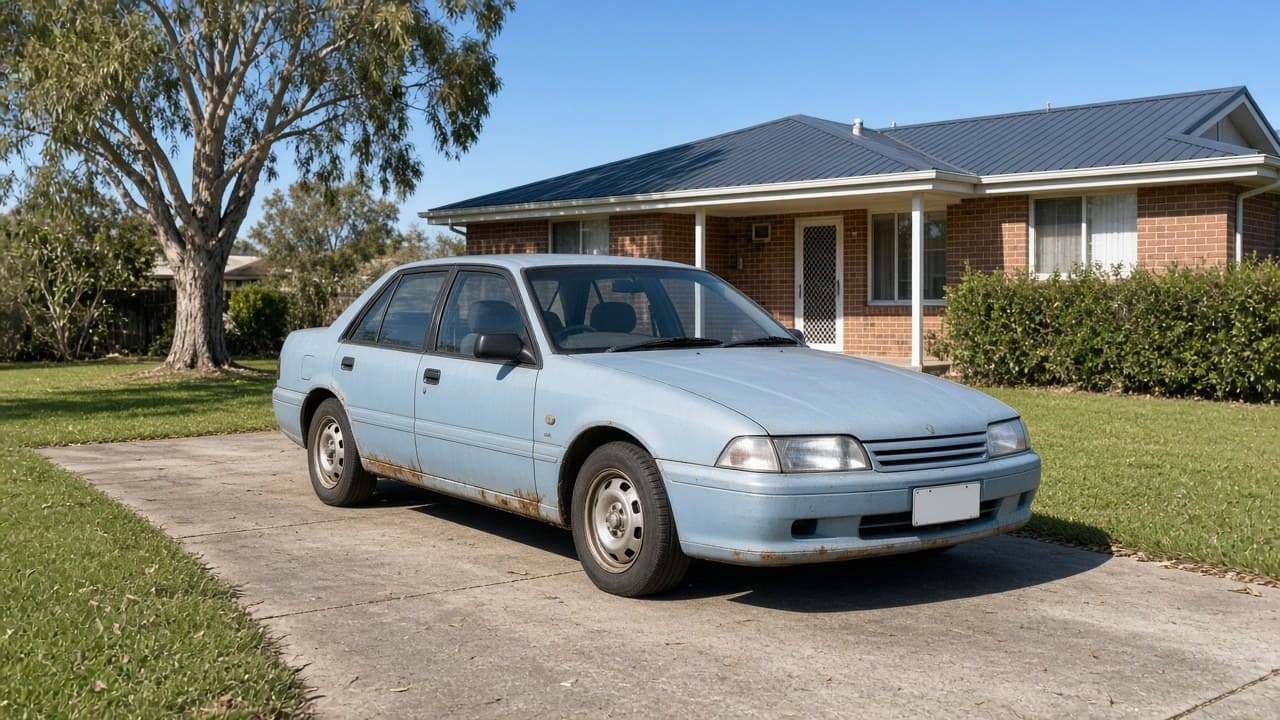
Yes, you can sell a rusty car in QLD. How you sell it depends on where the rust is and how bad it is. Light rust on a body panel rarely stops a private sale, but rust in the sills, floor, chassis rails or suspension mounts can fail a safety certificate. This guide explains how inspectors judge rust, what a defect notice for rust means, your selling options, scrap value and the TMR paperwork.
By A1 Cash for Cars Team · Last updated: 10 November 2026
A1 Cash for Cars is a licensed motor dealer with a yard at 60 Bowhill Rd, Willawong. We assess and buy unwanted, old, damaged, unregistered, scrap and non-running cars, utes, vans and 4WDs across Greater Brisbane, including cars with surface, advanced and structural rust.
Key takeaways
- Minor panel rust isn’t a fail on its own. TMR’s inspection manual says minor rust or corrosion in body panels is not considered dangerous to structural integrity. (TMR)
- Structural rust is a reason for rejection. A frame component corroded to the point where it is weakened or likely to fail, or a corroded fuel tank or fuel line, fails the inspection. (TMR)
- No safety certificate when you sell to a licensed dealer. Vehicles that are unregistered, or traded to licensed motor dealers, don’t need one. (Queensland Government)
- A defect notice for rust doesn’t trap you. If you can’t repair in time, TMR says you can ask for an extension, sell to a licensed motor dealer or cancel the registration. (Queensland Government)
- Be honest about the rust. Private sellers give no statutory warranty, but describing a rusty car as rust-free when you know it isn’t is misleading.
Can you sell a rusty car in QLD?
Yes. There’s no Queensland rule against selling a rusty car. What changes is the route. A registered car sold privately needs a current safety certificate, and structural rust can stop one being issued. You can still repair it, sell it to a licensed motor dealer or a dismantler, or sell it unregistered.
The Queensland Government’s selling a used vehicle page says the easiest way to sell is to a licensed motor dealer. If a registered vehicle is “in an unsafe condition or otherwise defective”, it lists four options:
- Repair all the defects, then sell it with a safety certificate.
- Sell it to an auto dealer.
- Sell it to an auto parts dismantler.
- Sell it unregistered.
So the first job is working out what kind of rust you have. A few bubbles on a guard is a cosmetic and value problem. Holes in the floor, rotten sills or corroded suspension mounts are a safety problem, and that shapes every other decision in this guide.
How does rust affect a car’s value and roadworthiness?
Rust lowers value because buyers see it as a sign of hidden damage and future repair bills, even when it looks small. It affects roadworthiness when it weakens the structure, such as sills, floors, chassis rails, pillars and suspension or seatbelt mounts, because those parts hold the car together in normal driving and in a crash.
TMR’s guidance on rust explains why structural corrosion matters. Cars are designed as rigid structures that are meant to collapse progressively and absorb energy in a crash. If rust weakens that structure, the car can lose some of its energy-absorbing capacity, which puts occupants at greater risk. TMR also notes that rust often develops in enclosed sections and in areas that hold road dirt and moisture, such as between panels, inside doors, around mudguards and inside the sills just below door level (TMR).
How rust usually affects a sale:
| Where the rust is | Typical effect on value | Typical effect on roadworthiness |
|---|---|---|
| Light surface rust on panels, stone chips | Small; buyers may negotiate | Usually none |
| Bubbling paint on guards, wheel arches, door bottoms | Noticeable; buyers worry about what’s underneath | Usually acceptable on outer panels, but it can spread |
| Rust holes in outer panels | Significant | Can fail if it leaves sharp edges or loose panels |
| Rust in sills, floor pan, pillars, chassis rails or boot floor | Major; many private buyers walk away | Likely to fail if the structure is weakened |
| Rust at suspension, steering, seat or seatbelt mounts | Major | Likely to fail |
| Rusted fuel tank, fuel lines or brake parts | Major | A rejection reason in TMR’s manual |
We don’t publish typical rust repair costs or offers, because they depend on the car, the extent of the corrosion and parts availability. For an older car, rust is often the issue that tips the balance; see selling an old or high-km car in Brisbane.
Does rust fail a QLD safety certificate?
It depends on where the rust is. TMR’s inspection manual says minor rust in body panels isn’t considered dangerous to structural integrity. A car fails if a frame component, door component, seat or belt anchorage, suspension part or brake part is corroded enough to be weakened or likely to fail, or the fuel tank or lines are rusted.
The Queensland Government says a safety certificate inspection covers basic safety items including tyres, brakes, steering, suspension, body rust or damage, windscreen and lights (Queensland Government). Approved inspection stations follow the Queensland Light Vehicle Inspection Manual (effective 7 July 2026). Its rust-related reasons for rejection include:
- Frame components (floor pan and sub frame) that are cracked, sagged, broken, distorted, missing or corroded to the point where a component is weakened or failure is likely.
- Door components corroded to the point where a component is weakened or likely to fail.
- Seats, seatbelt anchorages and child restraint anchorages that show corrosion likely to cause failure.
- Suspension components that are corroded, and spring media that are unduly rusted.
- Brake components that are seized or severely corroded.
- Fuel tanks or fuel lines affected by rust or corrosion.
- Repairs that don’t retain the original strength of the component or section.
TMR’s rust and corrosion information sheet classifies rust in three stages and splits the car into primary and secondary structure (TMR):
| Stage of rust | What it looks like | Primary structure (sills, pillars, floors, chassis rails, suspension, steering, seat and belt mounts, bulkheads) | Secondary structure (guards, roof, bonnet, bootlid, doors, exhaust) |
|---|---|---|---|
| Surface rust | Light, powdery corrosion on the surface | Acceptable | Acceptable |
| Advanced rust | Bubbling or pitting paint, eruption of oxidised metal | Not acceptable | Acceptable, except within 100 mm of hinges and locks |
| Extensive rust | Heavy encrustation that leaves holes when removed | Not acceptable | Not acceptable if it creates sharp edges, loose panels or exhaust leaks into the cabin |
The same guidance says repairs to primary structure made only with body filler aren’t acceptable, and should be made by welding in new metal of the same gauge. Filler or fibreglass can be used to smooth non-structural parts. If your car has already failed, our safety certificate guide explains the 14-day reinspection process.
Can you get a defect notice for rust in QLD?
Yes. A police officer or transport inspector can issue a defect notice at a roadside inspection if a vehicle doesn’t comply with vehicle standards or is unsafe, and serious rust can qualify. A defect notice isn’t a fine. It requires the owner to repair the car and clear the notice by the date shown on it.
The Queensland Government’s defect notices page explains how it works:
| Defect notice issue | What to know or do |
|---|---|
| Driving restrictions. | If the officer considers the defect dangerous, the car can be ordered off the road immediately and may need a tow truck or trailer. Otherwise you may be allowed to drive it to a specified place, such as home or a repair shop. The notice shows any conditions. |
| Defect labels. | For a dangerous defect, a label can be attached to the car. Removing it without authority is an offence. |
| Repair and clear. | The notice states what’s wrong and how to clear it. Some notices need an inspection at a transport and motoring customer service centre or another location. |
| Can’t fix it in time? | Ask the issuing officer for an extension, sell the car to a licensed motor dealer, or cancel the registration. |
| Ignoring it is an offence. | You could get an on-the-spot fine, be ordered to have a full inspection, or face action to cancel the registration. |
The Vehicle Standards and Safety Regulation 2021 (section 11) says the requirement to comply with a defect notice doesn’t apply if, within the compliance period, the vehicle’s registration is cancelled or the vehicle is disposed of to a dealer. Tell any buyer about the notice upfront. Our guide to selling a car with a defect notice in QLD covers the details.
Should you repair the rust before selling?
Repair it only if a written quote is clearly less than the extra value the repair adds, and you’re confident the rust hasn’t spread further than you can see. Cutting out and welding structural rust properly can uncover more damage. For many older cars, selling as-is to a licensed dealer avoids that risk entirely.
Questions to ask before spending money:
| Question | What to check |
|---|---|
| Is it surface rust or structural rust? | Ask an approved inspection station or a panel shop to look underneath, including the sills, floor and suspension mounts. TMR’s guidance says inspectors may probe underbody areas prone to rust with a rod or screwdriver. |
| Will the repair meet the standard? | Structural repairs must retain the original strength of the section. Filler alone isn’t acceptable on primary structure. |
| What’s the car worth once repaired? | Compare similar cars of the same age, kilometres and condition, not the asking price of the best one online. |
| What else is due? | Tyres, brakes, rego renewal and other faults add to the cost of keeping or fixing the car. |
| Do you need a private sale? | If you’re selling to a licensed dealer, you don’t need a safety certificate, so you don’t need to repair the rust first. |
For a broader decision framework, read repair or sell your broken car in Brisbane.
Should you sell a rusty car privately or to a dealer or wrecker?
Sell privately if the rust is light, the car is registered and it can pass a safety inspection. Sell to a licensed motor dealer or wrecker if the rust is structural, the car has a defect notice, or you don’t want to repair it, because no safety certificate is needed and the car can usually be towed rather than driven.
| Private sale (registered) | Private sale (unregistered) | Licensed motor dealer or cash-for-cars buyer | Auto parts dismantler or recycler | |
|---|---|---|---|---|
| Safety certificate | Required | Not required | Not required | Not required if unregistered or sold to a licensed dealer |
| Repairs first | Usually, if the rust is structural | No | No | No |
| Moving the car | Buyer drives it away | Unregistered vehicle permit if it’s safe to drive, otherwise towed | Usually collected or towed | Usually collected or towed |
| Disclosure | You must not mislead the buyer | You must not mislead the buyer | Describe the rust accurately for an accurate offer | Describe the car accurately |
| Rego paperwork | Transfer within 14 days | Cancel before sale | Dealer notifies TMR of the acquisition | Rego cancelled; Queensland says cars sold for parts must be de-registered first |
Sources: selling a used vehicle, safety certificates and unregistered vehicle permits, Queensland Government. A permit can’t be issued for a car that isn’t safe to drive, so a car with serious structural rust will usually need to be towed.
In a private sale, Queensland’s Office of Fair Trading says there’s no statutory warranty or cooling-off period, but you still must not make false or misleading statements (Queensland Government). Don’t paint over rust and call the car “rust-free”. Our guide to disclosing faults when selling a car in QLD explains where the line sits, and selling privately vs selling to a car wrecker compares the two routes in more detail.
What is a rusty car worth as scrap or for recycling?
A badly rusted car still has value in its metal and in any good parts, such as the engine, gearbox, wheels, glass and interior. What it’s worth depends on the make and model, demand for its parts, its weight and metal content, whether it’s complete, current scrap metal markets and how easy it is to collect.
Rust usually hurts value most when it ends a car’s life on the road, not when the car is scrapped. A wrecker or recycler is mainly interested in:
- Parts demand. A common model with a sound engine and gearbox can be worth more to a dismantler than its rusty body suggests.
- Completeness. Missing parts, such as the engine, catalytic converter or wheels, usually reduce an offer.
- Metal content. The stripped shell is crushed and shredded so the steel and other metals can be recovered. Heavily rusted panels contain less sound metal, so treat any weight-based estimate as a rough guide only.
- Access. Where the car is parked and whether it rolls, steers and has tyres that hold air affect how it’s loaded.
We don’t quote scrap prices in this guide, because they change and depend on the car. See how much your scrap car is worth in Brisbane for the factors that affect an offer, and car recycling in QLD for what happens to the car after it’s sold.
What paperwork do you need to sell a rusty car in QLD?
You need photo ID, proof you own the car or can sell it, and the right registration step. In a private sale of a registered car, give the buyer a current safety certificate and complete the transfer form, which must be lodged within 14 days. Selling to a licensed dealer, the dealer notifies TMR of the acquisition instead.
How the rego leaves your name depends on how you sell:
| How you sell | What happens to the registration |
|---|---|
| Private sale, registered | You and the buyer complete the Vehicle Registration Transfer Application (F3520), or you start the transfer online. The transfer must be done within 14 days. Keep Part B as your proof of disposal |
| Private sale, unregistered or for parts | Cancel the registration first with form F3517. Standard plates are usually handed in |
| Sale to a licensed motor dealer | No safety certificate. Under the Vehicle Registration Regulation 2021, a dealer who acquires a registered vehicle must notify TMR within 14 days. Keep your signed paperwork |
Sources: transferring registration and cancelling registration, Queensland Government, and the Vehicle Registration Regulation 2021. Cancelling a current registration may also produce a refund of unused rego and CTP, less a cancellation fee; see cancelling car registration and refunds in QLD.
Until TMR records the change, you remain liable for tolls and fines for a car registered in your name (Queensland Government). Queensland Police also suggest checking the buyer’s driver licence and making sure their full details are on the transfer form (Queensland Police Service). Our guide to transferring registration after selling a car in QLD walks through each form.
What should you do before selling a rusty car?
Take clear photos of the rust, including underneath if you can do so safely, and describe it honestly. Gather your ID, rego details and any inspection report or defect notice. Check for finance owing, remove personal items and toll tags, and note access details so the buyer can plan collection.
| Prepare | Why it matters |
|---|---|
| Photos of the rust (arches, sills, floor, boot floor, chassis if visible) | Helps a buyer give an accurate offer and avoids a changed price on the day |
| Any inspection report or defect notice | Shows exactly what’s been flagged |
| Year, make, model, kilometres and whether it drives | The basis of any quote |
| Photo ID and registration details | Licensed dealers record the seller’s identity |
| Proof you can sell (registered operator or authority) | Only the owner or an authorised person can sell |
| Finance and PPSR status | Money owing must be cleared before the car is sold |
| Keys, remotes and service records | Help the buyer assess and move the car |
| Location and access notes | Driveway slope, carports, gates and whether the car rolls |
Before handover:
- ☐ Remove personal items, garage remotes, parking permits and the toll tag
- ☐ Update Linkt and take the rego off direct debit
- ☐ Decide what’s happening with personalised plates, if you have them
- ☐ Get a signed receipt or sale document showing the date, time, VIN and price
A PPSR search shows whether a security interest is recorded against the car. If there’s finance owing, read our PPSR check guide first.
How does selling a rusty car to A1 Cash for Cars work?
Call or request a quote with the car’s details and a description of the rust. We assess it from what you tell us and make an offer. If you accept and the car can be reached safely, we agree a time, check ID and ownership, complete the paperwork, pay as agreed and take the car.
What to expect:
- Quote. Call 0400 119 641 or request a quote. Tell us the year, model, kilometres, where the rust is, whether the car drives and your suburb.
- Booking. If we accept the car and can reach it safely, we agree a time. Collection depends on ownership, location and safe access, and we don’t quote blanket fees or promise every address in this guide.
- On the day. Photo ID, an ownership check, seller paperwork, payment as agreed and loading of the vehicle.
- Afterwards. Remove your toll tag, update Linkt, stop any rego direct debit and check the registration has left your name.
A1 Cash for Cars is a licensed motor dealer at 60 Bowhill Rd, Willawong QLD 4110. Sellers to A1 don’t need a safety certificate, and we can often collect damaged and written-off cars, subject to ownership, insurer status and safe access. You can check our licence on the Office of Fair Trading licensing register.
Frequently asked questions
Will a car with surface rust pass a safety certificate in QLD?
Often, yes. TMR’s inspection manual says minor rust in body panels isn’t considered dangerous to structural integrity. The car can still fail for other faults, or if rust has weakened structural parts, door components, mounts, brakes or the fuel system.
What kind of rust fails a QLD safety inspection?
Rust that weakens the structure or makes failure likely, such as corroded sills, floors, chassis rails, pillars, suspension parts, or seat and seatbelt anchorages. A rusted fuel tank or fuel line is also a reason for rejection, as are repairs that don’t keep the original strength.
Can I sell a rusty car without a safety certificate?
Yes, if you sell it to a licensed motor dealer or sell it unregistered. A private sale of a registered car needs a current safety certificate, and you can be fined over $700 for not having one when you dispose of the car.
Can I just fill and paint over rust before selling?
Not on structural parts. TMR’s guidance says repairs to primary structure made only with body filler aren’t acceptable and should be welded with new metal of the same gauge. Covering rust and calling the car rust-free could also mislead a buyer.
I got a defect notice for rust. Can I still sell the car?
Yes. If you can’t repair it by the date on the notice, Queensland says you can ask for an extension, sell the car to a licensed motor dealer or cancel the registration. Give the buyer a copy of the notice upfront.
Do wreckers buy rusty cars that don’t run?
Many do, because the car still has metal and parts value. Offers depend on the model, parts demand, completeness and access. A1 Cash for Cars buys rusty, damaged and non-running cars, subject to ownership and safe access.
What happens to the rego when I sell a rusty car?
In a private sale of a registered car, the transfer must be done within 14 days, and you should keep Part B of the F3520. If you sell unregistered or for parts, cancel the registration first. A licensed dealer notifies TMR when it acquires a registered car.
Sources cited
- Safety certificates, Queensland Government
- Selling a used vehicle, Queensland Government
- Defect notices, Queensland Government
- Vehicle inspection manuals (Queensland Light Vehicle Inspection Manual, effective 7 July 2026), Department of Transport and Main Roads
- Code of Practice: Vehicle Safety Standards, Section 3A, including the rust and corrosion information sheet, Department of Transport and Main Roads
- Transport Operations (Road Use Management—Vehicle Standards and Safety) Regulation 2021, Queensland Legislation
- Transport Operations (Road Use Management—Vehicle Registration) Regulation 2021, Queensland Legislation
- Unregistered vehicle permit, Queensland Government
- Transfer registration in person, Queensland Government
- Cancelling your vehicle registration, Queensland Government
- Buying used cars privately, Queensland Government (Office of Fair Trading)
- Seller beware: what you need to know when selling a vehicle, Queensland Police Service
- Fair Trading licensing register, Office of Fair Trading
- Do a used car or vehicle search, Personal Property Securities Register
About the author
A1 Cash for Cars Team. A1 Cash for Cars is a licensed motor dealer at 60 Bowhill Rd, Willawong, buying unwanted, rusty, damaged, unregistered and non-running vehicles across Greater Brisbane. This guide is general information, not legal or mechanical advice. Inspection standards, defect notice rules and fees can change, so check the linked official pages or call TMR on 13 23 80, and have an approved inspection station or qualified repairer assess structural rust. Last updated 10 November 2026.
Ready to sell a rusty car?
Call 0400 119 641 or request a quote. Tell us the year, model, kilometres, where the rust is, whether the car is registered or has a defect notice, your suburb and access, and any finance or insurer involvement.
Last updated
Ready to find out what your car is worth?
Send us your vehicle details to request a quote.